| Type | Holistic wellness approach |
| Focus | Physical healing • Mental healing • Spiritual healing |
| Origins | Ancient spiritual traditions and modern scientific paradigms |
| Perception | Alternative or fringe modality by mainstream medicine |
| Popularity | Growing global following in recent decades |
| Techniques | Meditation • Rituals • Energetic practices |
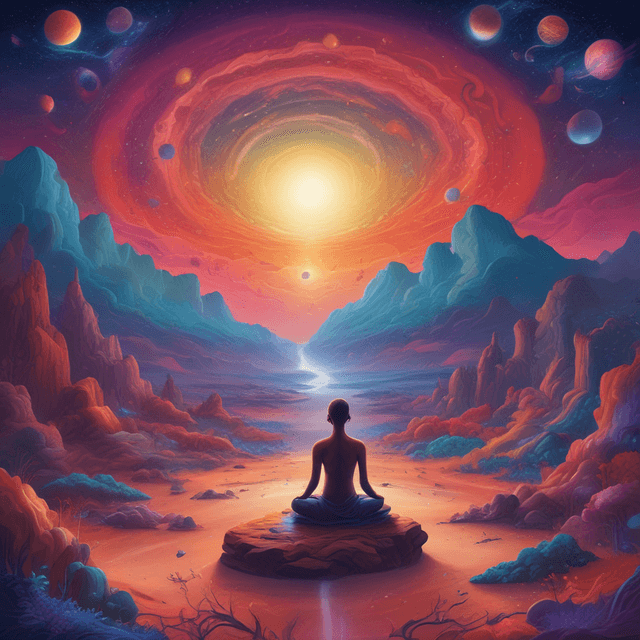
Cosmic healing is an holistic approach to wellness that views the human individual as fundamentally interconnected with the energetic forces of the universe. Blending ancient spiritual traditions from around the world with modern scientific concepts from quantum physics and consciousness studies, cosmic healing practitioners use a variety of meditative, ritualistic, and energetic techniques to promote healing and balance on the physical, mental, and spiritual planes.
The core tenet of cosmic healing is the idea that all life, including the human body and consciousness, is imbued with and shaped by the same fundamental cosmic energies that animate the stars, planets, and greater universe. This worldview has roots in diverse traditions such as shamanism, astrology, Taoism, Hinduism, and Hermetic philosophy.
Cosmic healers believe that imbalances, blockages or disconnections within an individual's energetic field or chakra system can lead to physical, emotional or psychological ailments. By aligning oneself with beneficial cosmic rhythms and frequencies, they assert, it is possible to restore harmony and facilitate deep, holistic healing.
Cosmic healing encompasses a wide range of practices and techniques, including:
Practitioners may also incorporate elements of herbalism, nutrition, breathwork, and other holistic wellness modalities into their cosmic healing work.
While belief systems centered on the spiritual dimensions of the cosmos have existed for millennia, the modern "cosmic healing" movement began to coalesce in the 1960s and 1970s. This period saw a resurgence of interest in Eastern philosophy, new age spirituality, and alternative medicine as a counterpoint to the rationalism of Western science and the reductionism of conventional healthcare.
Influential figures like Fritz Capra, Fritjof Nils Vikingsson Bohm, and Deepak Chopra helped to popularize the idea of viewing the human being as an "energetic" entity fundamentally interwoven with the fabric of the universe. This perspective resonated with growing segments of the public who were disillusioned with the perceived limitations of mainstream materialist science and medicine.
In the decades since, cosmic healing has continued to grow in popularity, driven by a desire for more holistic, spiritually-grounded approaches to health and well-being. While still considered an "alternative" or "fringe" practice by many in the medical establishment, it has developed a significant global following, with training programs, professional organizations, and a robust market for related products and services.
Proponents of cosmic healing point to numerous anecdotal accounts of its efficacy in treating a wide range of physical, mental, and emotional issues. They contend that by restoring energetic balance and alignment, it can activate the body's innate self-healing capacities in ways that conventional biomedicine often fails to address.
However, the scientific community remains highly skeptical of cosmic healing's claims, arguing that there is little rigorous empirical evidence to support its underlying metaphysical premises or therapeutic benefits. Critics contend that it represents a form of "pseudoscience" that preys on people's vulnerabilities and desires for meaning, rather than providing genuine medical solutions.
Debates around cosmic healing's legitimacy continue, with both sides accusing the other of close-mindedness or dogmatism. Nonetheless, its growing popularity suggests a hunger among many for more holistic, spiritually-infused approaches to health and wellness - a hunger that the mainstream medical establishment has yet to fully satisfy.
